|
Biography
James Joseph
“Jim” Tinneny
Sr.
James Joseph Tinneny was the seventh child and second son of Patrick “Yankee
Pat” Tinneny and Margaret Malloy. He was born on September 26, 1888 at the
family’s home on East Shaw Street in Greenock, Scotland.
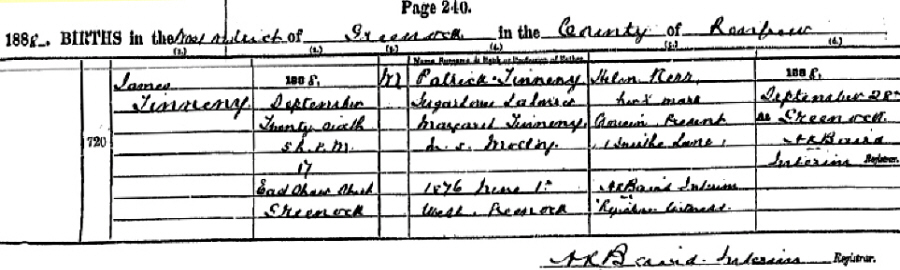
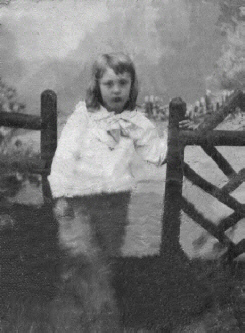
Photo: Jim as a boy in
Scotland 1901.
As did the rest of the family,
James attended Saint Mary’s Church and Primary School. He and his sister Rose
were especially close to their brother Francis who died as a young boy while the
family lived at Shaw Street. .
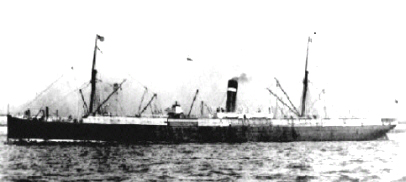
On December 27,1900, when he
was 12 years old, Jim sailed to America aboard the Sardinian. He accompanied his mother, his
sisters Alice, Margaret, Elizabeth and Rose and young Patrick on the voyage.
They sailed from the port of Glasgow in Scotland and arrived in New York on
January 12, 1901.
Photo:SS Sardinian – the ship that Jim came to America
aboard
As was the case with the young
boys in Greenock, Jim surly played football (soccer) while growing up in
Greenock. Later, as an adult in America, he was well known in his neighborhood
for his skill in this sport. At the time, soccer was not a well known or a
commonly played sport in the United States, except among the European immigrants
who learned the game in their home countries.
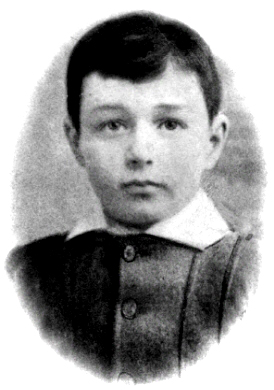
Photo:
Jim about the time he came to America.
Jim probably completed his
primary schooling, which he began at Saint Mary’s in Greenock, at Holy Family
Primary School located on Hermitage Street in the Manayunk section of
Philadelphia. According to his son Donald, after primary school Jim went on to
attend Saint John’s High School in the Roxborough section of Philadelphia. The
high school was a part of Saint John the Baptist Parish in Manayunk. He left
Saint John’s after completing only 1 or 2 years of the school’s 4-year program.
He went to work with the Bell Telephone Company. After working for the phone
company he worked for Budds Company, Auto Car Division, in Philadelphia as a
carpenter and pattern maker.
By April 1910 Jim had moved
from the house of his parents on Baldwin Street and was living with his sister
Alice and her family. In the Census taken April 19, 1910 Jim is enumerated in
the household of his brother-in-law Cornelius Hart. At the time Alice and her
husband had one child Isabella.
Both Jim’s mother and Manny
Wier, who raised Gertrude Spence, were against Jim and Gert marrying. On the
one hand Jim’s mother was against the union because of the strong history of
tuberculosis in Gert’s family. On the other hand, Gert’s guardian, Manny was
against the couple marrying because of the history of health problems in the
Tinneny family. Friction over the relationship of Jim and his girlfriend Gert
may well explain why Jim was living in the home of his sister at the time of the
1910 Census instead of in the home of his parents.
On June 4, 1910 James married
Gertrude Ann “Gert” Spence. They were married in Philadelphia. The marriage
was recorded with the Clerk of the Orphans Court, Philadelphia County,
Pennsylvania by Joseph J. Hannigan on July 19, 1910. The entry is numbered
251792.
Gertrude was born September
26, 1890. She was the daughter of Matthew Spence and Annie O’Neill. She was
baptized October 19, 1890. Her paternal grandfather was
John Spence who was born in County Cork, Ireland. His true name was John
Spillane as recorded on a Total Abstinence Society Pledge Certificate which was
signed by the founder of this Society. The Very Reverend Theobald Matthew
Founded the society April 10, 1838. John took the pledge August 27,
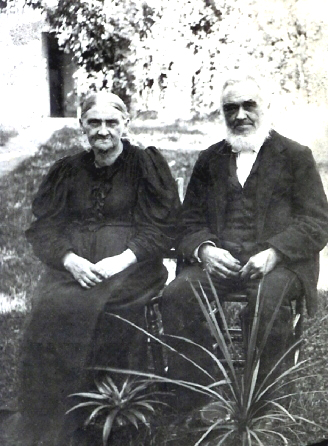 1853,
and was recorded as the 5,700,062 member. John’s great-grandson, Gertrude’s son
James J. Tinneny, said that he believed the reason his great-grandfather John
changed his name from Spillane to Spence was to better fit in when he went to
England from Ireland to apprentice as a papermaker. 1853,
and was recorded as the 5,700,062 member. John’s great-grandson, Gertrude’s son
James J. Tinneny, said that he believed the reason his great-grandfather John
changed his name from Spillane to Spence was to better fit in when he went to
England from Ireland to apprentice as a papermaker.
He must have learned his trade
well since the first job that he had after landing in America was in the employ
of the Wilcox family who James believed had a paper mill in Glen Riddle
Pennsylvania. The Wilcox family were socially and financially important in the
Diocese of Philadelphia and were extremely good to the Irish.
Photo: Gert Spence
Tinneny’s grandparents, Honora Wilson and husband John Spence.
John moved with his family to
Chestnut Hill, just outside Philadelphia. They lived in a twin gray stone house
near the Mother House of the Sisters of Saint Joseph. John’s son Matthew and
his daughter Manny both were day students at Mount Saint Joseph’s Academy and
were taught by the Sisters of Saint Joseph.
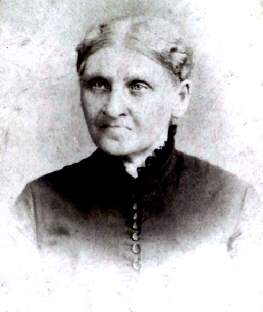 John
Spence, Gertrude’s grandfather, went to work at the W. C. Hamilton’s Paper Mill,
which is located in Miquon, Pennsylvania where it joins Philadelphia at River
Road. The superintendent of the mill at the time was Philip Gaul who sponsored
John for his United States citizenship. His citizenship was awarded September
30, 1868. John
Spence, Gertrude’s grandfather, went to work at the W. C. Hamilton’s Paper Mill,
which is located in Miquon, Pennsylvania where it joins Philadelphia at River
Road. The superintendent of the mill at the time was Philip Gaul who sponsored
John for his United States citizenship. His citizenship was awarded September
30, 1868.
Photo:
Honora Wilson Spence.
John Spence’s wife, Gertrude’s
grandmother, was Honora Wilson. Her father was Thomas Wilson who was born in
Edinburgh, Scotland. He was a Presbyterian who converted to the Catholic
faith. John and Honora’s great-grandson, James J. Tinneny Jr. didn’t know for
sure if the couple had married in Ireland, England or in America.
John and Honora’s son,
Gertrude’s father, Matthew was a blacksmith. For a time he catered to the
carriage trade on Philadelphia’s Main Line. Unfortunately, according to
Gertrude’s son James, his clients were poor at paying their bills and left him
in financial difficulties.
Matthew married Ann O’Neill of
Philadelphia. Ann’s father was Richard O’Neill. He was probably born in
Tipperary, Ireland and came to America between 1840 and 1845. Richard had at
least three children two of whom, John and James served in the Spanish American
War. Richard entertained, along with Bill Ambrose, a local plumber, at various
functions at Holy Family Church as well as at the parish’s annual July 4th
picnic.
 Both of Gertrude’s parents,
Matthew and Ann, died when Gertrude was only 7 years old. They died in Manayunk.
Her mother was buried in the Cemetery of Saint John the Baptist Church in
Manayunk. When the city put through Tower Street and Hill Road near the church,
it went through the cemetery and all of the bodies in that section were
reburied. Her present resting place is unknown. Both of Gertrude’s parents,
Matthew and Ann, died when Gertrude was only 7 years old. They died in Manayunk.
Her mother was buried in the Cemetery of Saint John the Baptist Church in
Manayunk. When the city put through Tower Street and Hill Road near the church,
it went through the cemetery and all of the bodies in that section were
reburied. Her present resting place is unknown.
After the death of her
parents Gertrude was raised by her father’s sister Margaret “Manny” and her
husband John Weir on Hermitage Street in Manayunk. John was a railroad
detective. As a young girl Gert was apprenticed as a dress maker to McKernan’s
Dress Makers on Hermitage Street in Philadelphia. After her marriage to James
she made many of the clothes for her young family. Years later Gert advised her
daughter Trudy, who liked to sew, not to learn to sew because everyone will want
you to do their sewing.
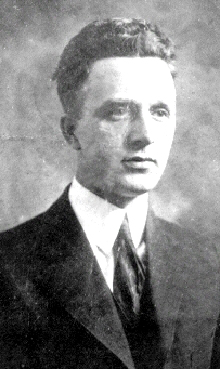
Photo:
James at about age 22.
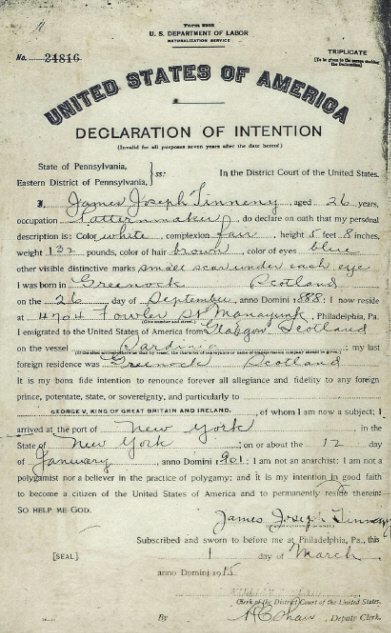
 On March 1, 1915, when he was
26 years old, James initiated a Declaration of Intent (#24816) to the United
States Department of Labor, Naturalization Service. This was the first step
required to become a citizen of the United States of America. In the petition
he is described as a pattern maker, white with a fair complexion and with brown
hair. He was 5 feet 8 inches tall and weighed 132 pounds. He had a small scar
under each eye. On March 1, 1915, when he was
26 years old, James initiated a Declaration of Intent (#24816) to the United
States Department of Labor, Naturalization Service. This was the first step
required to become a citizen of the United States of America. In the petition
he is described as a pattern maker, white with a fair complexion and with brown
hair. He was 5 feet 8 inches tall and weighed 132 pounds. He had a small scar
under each eye.
The Declaration shows that he
emigrated to the United States from Greenock, Scotland aboard the vessel
Sardinia and arrived in New York on January 12, 1901. In the document James
declared his “bona fide intention to renounce forever all allegiance and
fidelity to any foreign potentate, state or sovereignty, and particularly to
George V, King of Great Britain and Ireland of whom I am now a subject.” The
Declaration of Intention was filed in the District Court of the United States,
Eastern District of Pennsylvania.
On November 27, 1917, he
completed a Petition for Naturalization to obtain United States citizenship.
That petition was numbered 858112, and is in petition volume 104, number 25927.
At the time, the petition shows that he, Gert and their Five children James 6,
Mary 5, John 3 and Joseph 8 months were living at 4724 Fowler Street in
Philadelphia.
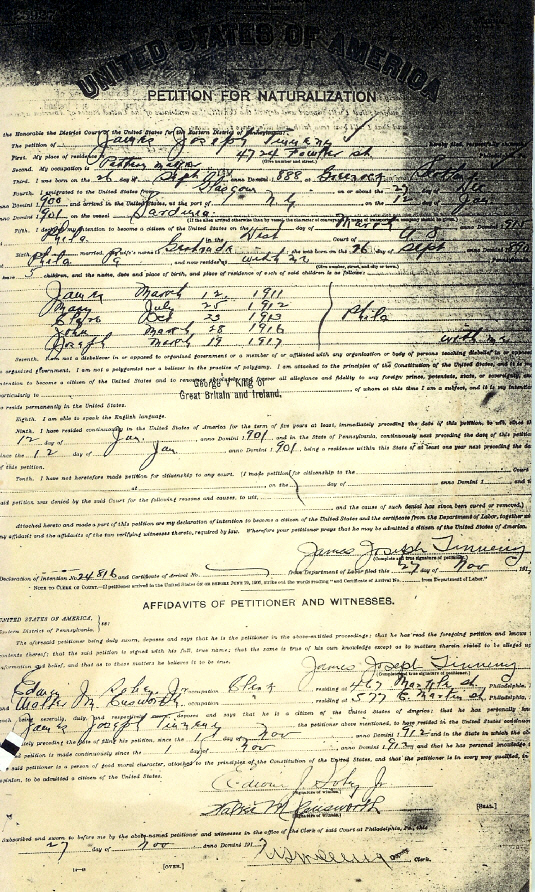
Edwin J. Sobey of 467 Markle
Street, Philadelphia and Walter M. Cusworth of 577 E. Martin Street,
Philadelphia sponsored James for citizenship. They both certified that they
knew him as a resident of Pennsylvania since November 1, 1912. They further
attested to the fact that they had personal knowledge of his good moral
character and that he believed in the principles of the Constitution of the
United States.
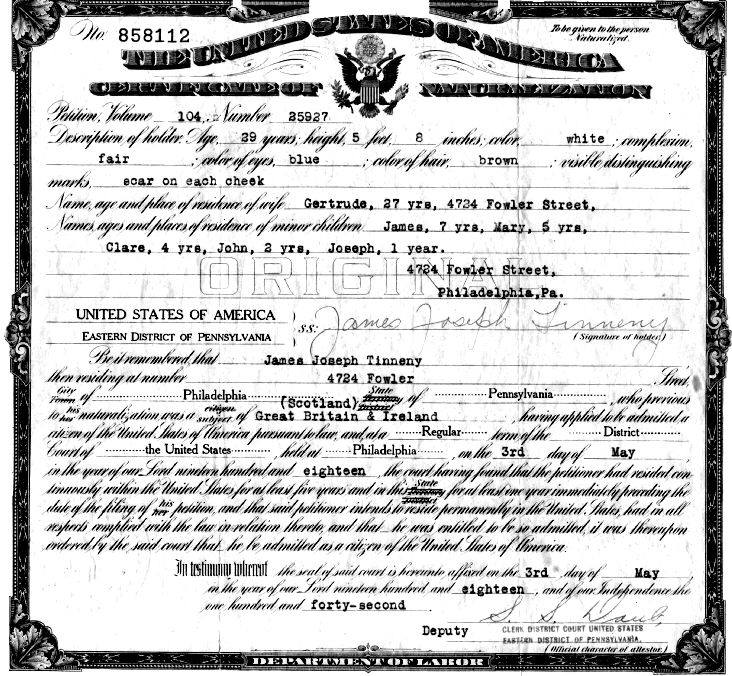
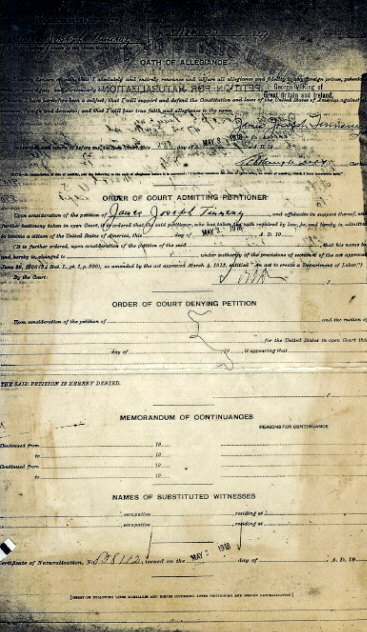
On May 3, 1918, Jim took the Oath of Allegiance to the United States and was
awarded United States citizenship. He was issued Certificate of
Naturalization No. 858112.
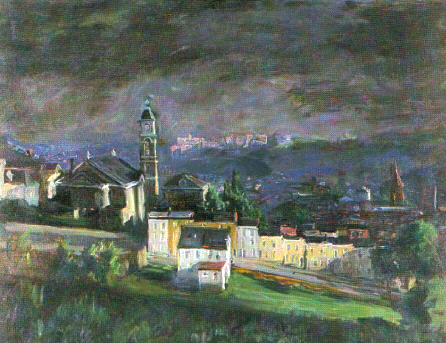 While the first of their
children were young, Jim and Gert lived in the immediate neighborhood around
Holy Family Church. They rented several houses on Fowler Street including 4747
and 4724. They also lived in a house on lower Gates Street, which was on the
west side of the church. Although the Gates Street house had a bathtub in the
bathroom there was no plumbing to the room and it was never hooked-up. Some of
the children used to go to their Uncle John and Aunt Manny Weir’s home on
Hermitage Street to take their baths while others, including Clare, went to
their father’s sister Maggie’s and her husband Ed McKenna’s home on Ripka Street
in Manayunk. While the first of their
children were young, Jim and Gert lived in the immediate neighborhood around
Holy Family Church. They rented several houses on Fowler Street including 4747
and 4724. They also lived in a house on lower Gates Street, which was on the
west side of the church. Although the Gates Street house had a bathtub in the
bathroom there was no plumbing to the room and it was never hooked-up. Some of
the children used to go to their Uncle John and Aunt Manny Weir’s home on
Hermitage Street to take their baths while others, including Clare, went to
their father’s sister Maggie’s and her husband Ed McKenna’s home on Ripka Street
in Manayunk.
Painting: The Tinneny home on Gates Street was the white one immediately next to
the church – the first house on the block.
Jim was well known throughout
the neighborhood for his skill with making things out of wood.
 These included a
complete set of circus wagons correct to the smallest detail; Maggie and Jiggs
figures (they were local cartoon characters); a miniature doll house for his
daughter Gertrude which he secretly made in the attic; a set of bowling pins
made to look like brightly painted marching band figures for his son Jim Jr. who
would roll a ball at them to knock them down and a wide variety of other toys.
The only known surviving pieces of his handiwork is a toy military tank that he
made for his son Don who prized the toy. Also surviving is a shelf that he made
for his son John to hold 2 riding trophies that John had won while riding in
Marine Corps horse races in China in the 1930s. He usually painted the wooden
toys that he made with very bright eye-catching colors. These included a
complete set of circus wagons correct to the smallest detail; Maggie and Jiggs
figures (they were local cartoon characters); a miniature doll house for his
daughter Gertrude which he secretly made in the attic; a set of bowling pins
made to look like brightly painted marching band figures for his son Jim Jr. who
would roll a ball at them to knock them down and a wide variety of other toys.
The only known surviving pieces of his handiwork is a toy military tank that he
made for his son Don who prized the toy. Also surviving is a shelf that he made
for his son John to hold 2 riding trophies that John had won while riding in
Marine Corps horse races in China in the 1930s. He usually painted the wooden
toys that he made with very bright eye-catching colors.
James
daughter Mary “Moan” remembered Jim beginning to work on Easter toys as early as
Christmas. As late as the 1950s Jim’s contemporaries, including Mr. Pete Grey
who owned a neighborhood grocery store at Gates and Silverwood Streets, related
descriptions to Jim’s grandchildren of the many wonderful wooden toys that Jim
had made when his children were young.
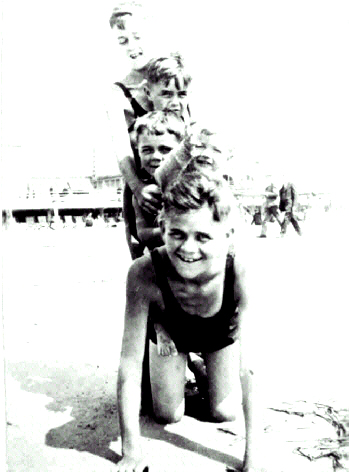
Photo:
Bottom to top – Jim & Gert’s sons Jack, Donald, Bruce, Tom and Joe at the beach
in Wildwood New Jersey.
In addition to the toys, he
made beautiful cabinets and other furniture. It is said that all he had to do
was to look at a piece of furniture and he could make an exact pattern and
duplicate the piece. Jim strongly believed in supporting the church
financially. Although he didn’t make
 much of a salary on his job as a pattern
maker, considering the size of his family he always supported the church
financially. His daughter Moan recalled that when there was a special need or
collection in the parish her father always did his part then some. much of a salary on his job as a pattern
maker, considering the size of his family he always supported the church
financially. His daughter Moan recalled that when there was a special need or
collection in the parish her father always did his part then some.
For example, in advance of the
annual parish block collection, which involved the parish priest visiting each
home in the parish and expecting a substantive donation, Jim would take a
carpentry job in the neighborhood to earn the money beyond his regular income so
he could give a healthy donation to the priest. He would also take these extra
jobs to meet any special needs for money that came up in the family.
Although they didn’t have a
lot of money or materiel things, Jim and Gert were very proud and wouldn’t
accept what could be perceived as a handout. Their daughter Trudy recalled how
her grandmother, her father’s mother Margaret, used to make up baskets around
the holidays and take them to the poor families in the neighborhood. On one of
the holidays she left one such basket on the front doorstep of Jim and Gert’s
house. Jim and Gert were offended by the well-intended gift and sent it back to
Jim’s mother.
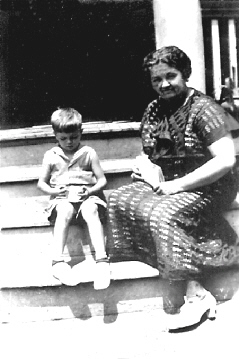
Photo: Gert & youngest
child Don.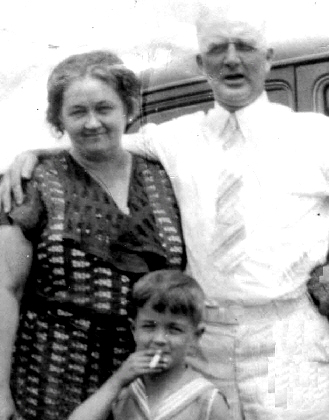
At Christmas, Jim always took
his children to visit the homes of his brothers and sisters and their
grandmother Tinneny. They would sit around and talk, have refreshments and play
games with their cousins.
Since Jim was an avid reader
the Tinneny household was never lacking for books. For many years he subscribed
to the National Geographic Magazine, which he and the rest of the family would
read from cover to cover. The magazines were then saved and eventually grew
into a major collection.
Photo:
Jim, Gert and son Donald pretending he is smoking.
With a house full of kids to
keep in line, Jim and Gert had a cat-a-nine tails in the house, according to
their daughter Trudy, but it was never used. When the kids began to act up all
Jim had to do was to put his hand on his belt and the kids would snap into line.
Even though they had a bunch
of their own children, from time to time, Jim and Gert had other children in
their home that they helped to raise as well as a constant stream of friends of
their children, nieces and nephews.
Jim’s sister Mary Jane Tinneny
McColgan died in 1915 when she was only 33 years old and she left 4 young
children. Their father tried to raise them for a time but he couldn’t and
placed them in an orphanage. When Jim learned of this he went to the orphanage
and took the children out. He brought them back to Manayunk. He then went
 around to various family members and convinced them to take the children in. He
said if they refused to take the children he wouldn’t visit them again. around to various family members and convinced them to take the children in. He
said if they refused to take the children he wouldn’t visit them again.
As a result of his efforts
Catharine “Kitty” was taken in and raised by Mary and Barney Malloy, Johnny was
raised by Jim’s sister Maggie and her husband Ed McKenna, Isabella “Pat” was
raised by Jim’s brother John and Jim and Gert took in young Ed and raised him
until he went into the navy.
Although Isabella took the Tinneny name when she was living with John Tinneny
and his family, Jim wouldn’t allow Ed to change from McColgan to Tinneny because
he said that “all men should have their own name.”
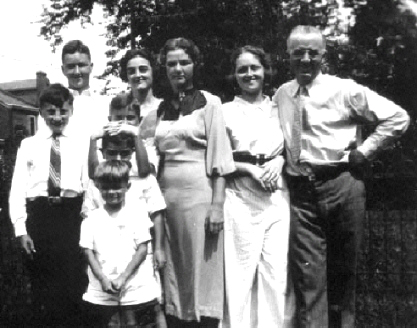
Photo:
L to R back row: Jim’s son Joe, daughters Trudy, Mary, Clare, Jim. Boys standing
behind each other youngest sons Don, Bruce, Tom. Boy to left unknown.
 Although he was an athlete, an
outdoorsman, and very patriotic he did not allow his sons to be in the Boy
Scouts while they were growing up because he said that their weekend camping
trips would prevent them from going to Sunday Mass. Although he was an athlete, an
outdoorsman, and very patriotic he did not allow his sons to be in the Boy
Scouts while they were growing up because he said that their weekend camping
trips would prevent them from going to Sunday Mass.
A frequent visitor to the
Tinneny house on Pechin Street was Robert Sickinger, the grandson of Jim’s
sister Kate. Bob remembers how as a child he thought that his Uncle Jim and his
family were rich because they always had so much good food as compared with what
he had growing up. To the present he, as did many of the people who knew Gert
Tinneny when she kept house, raves about her cooking in general and about her
vegetable soup in particular. She was known for making the best vegetable soup
in the neighborhood.
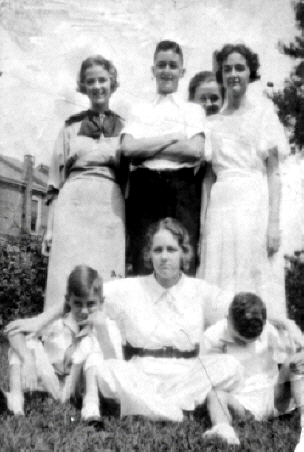
Photo:
Top Row left to right: Jim’s Daughter Mary, son Joe, wife Gert, daughter Trudy.
Seated left to right: son Tom, Daughter Clare and probably son Bruce.
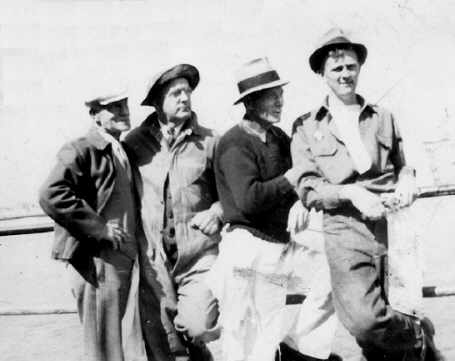
Photo: Jim second
from left with son John far right fishing on the New Jersey coast early 1940s.
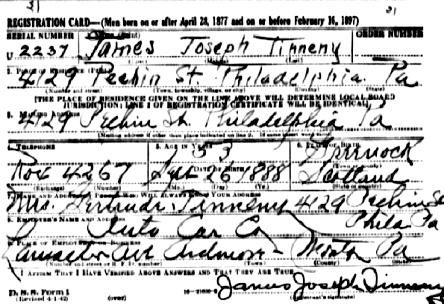
By the
time of the Second World War, Jim and his family were living at 4129 Pechin
Street, Philadelphia. According to the text of a script for the war years radio
broadcast, Valor Knows No Creed, on which his son William “Bruce” was featured,
Jim attempted to enlist in the service to support the war effort. The story has
it that on two occasions he tried unsuccessfully to enlist. The first time he
was denied because of his age, he was in his early 50s. The script goes on to
say that he was denied the second time because of his vision. Such actions
wouldn’t have been out of character for Jim, since he was known for his extreme
patriotism. These stories, of his attempts to enlist, are uncorroborated and
may have been the result of literary license taken by the script writers who
developed the broadcast.
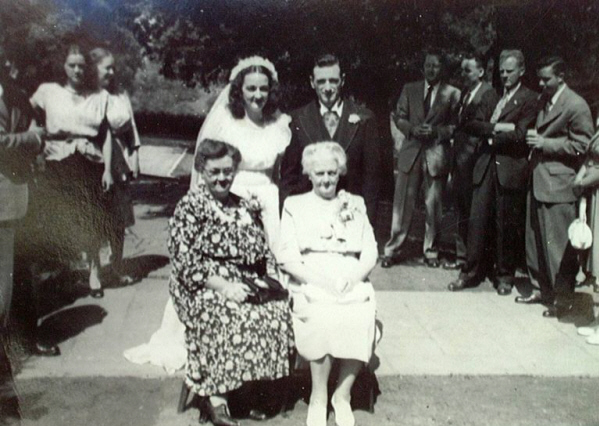
Photo: Gertrude seated left with her daughter Trudy and her
husband standing behind her. Men in right of photo are Gert and
Jim's son Joseph, son in law Ed Haughey, sons Jack and Bruce. The
woman left side back is Jim & Gert's daughter Clare.
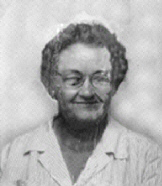
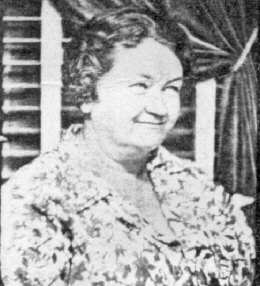
Photographs: Jim’s wife
Gertrude Ann Spence.
Rare Photographs since she
didn’t like to have her picture taken.
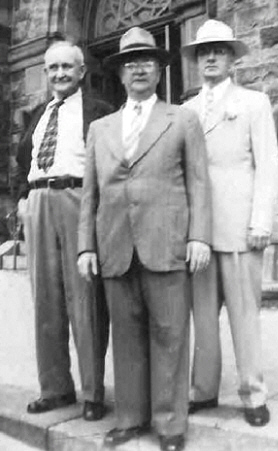
Although
Jim did not make World War II, three of his sons did. Thomas, William “Bruce”
and Joseph served, saw combat and were decorated. His son John served in the
United States Marine Corps in China and the Philippines before the United States
entered World War II.
Photo: L to R Jim’s brother in law
Ed McKenna husband of his sister Margaret, Jim’s older brother John and Jim.
As
earlier mentioned, Jim was an ardent soccer player. He also enjoyed fishing,
playing baseball and reading books. He was active in local Republican party
politics at the ward level. He strongly supported the Hamiltons in
Philadelphia’s 21st Ward. They, along with Hugh Scott, who later
went on to become a Senior United States Senator, were frequent visitors to the
Tinneny house.
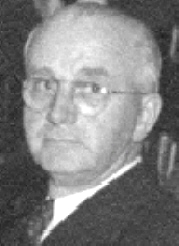 Jim debated politics frequently in his home. He frequently said
that, “politics could be clean.” In addition to his work, sports and politics
he was very active in Saint John the Baptist Church. For many years he was the
Head Usher at Saint John’s. Jim debated politics frequently in his home. He frequently said
that, “politics could be clean.” In addition to his work, sports and politics
he was very active in Saint John the Baptist Church. For many years he was the
Head Usher at Saint John’s.
Photo:
Jim at the wedding of his brother John in the 1940s.
In 1948, Jim was diagnosed
with terminal cancer. The cancer had invaded his colon, as it had done
with his mother. He spent the last year of his life in and out of Lankenau Hospital.
His nephew Frank Sickinger, the daughter of his sister Kate, was a frequent
visitor of Jim’s during this time. Frank frequently took Jim to Lankanau for
his treatments. The year before he died he had about six operations for the
cancer.
As a result of a colostomy, he
was required to wear a bag on his side that needed to be changed twice a day.
His condition was such that Gert was unable to care for him so he lived for a
time with his daughter Moan and her family in their home on Houghton Street.
After four months with Moan
and her family, Jim moved to the home of his son Thomas and his wife Marie on
Pensdale Street. He was bed ridden and in terrible pain for a long time. The
disease ravaged his once athletic body down to a weight of 80 pounds. On
December 8, 1949, with a crucifix clutched to his breast, James passed away.
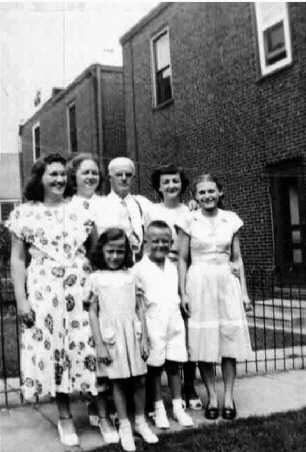
Photo: L-R daughter
in law Helen Diamond Tinneny, daughter Clare, Jim, daughter Trudy, daughter in
law Marie. Granddaughter Mary Ann Tinneny and grandson Richard Tinneny
(presently of South Carolina).
The wake and viewing were held
at Eddie Smith’s Funeral Home at Merrick and Pensdale Streets in Roxborough. It
was a rainy night and people stood in long lines outside the funeral home, to
pass before the coffin and to give their condolences to the family. In the
lines were many politicians, friends and neighbors. Following a mass of burial
at Saint John the Baptist Church, James was buried at Saint Mary of the
Assumption Church Cemetery in Roxborough on December 12, 1949. He was laid to
rest in his wife’s family, (the Spence) plot, number VI 68.
 During Jim’s final illness,
Gertrude lived in an apartment on Pechin Street with her sons Joseph and Don who
were unmarried at the time. Gert’s condition became such that it was necessary
for her to be cared for full time in the Landis Nursing home in Roxborough.
Near the nursing home was the Jefferies Movie Theater which some of her
grandchildren including myself frequently attended. After a Saturday or Sunday
afternoon movie at the Jefferies, I (her grandson Richard) would usually go by
the nursing home and see Grandmother Tinneny. During one of these visits she
asked if I would get her some chocolate candy. She said not to tell the nurses
because they wouldn’t let her have the chocolate. After that I regularly
smuggled chocolate to her, which she definitely wasn’t suppose to have. On more
than one occasion the nurses from the home called my parents about these
smuggling activities but I continued to bring the goodies to grandmother Tinneny
at the nursing home. During Jim’s final illness,
Gertrude lived in an apartment on Pechin Street with her sons Joseph and Don who
were unmarried at the time. Gert’s condition became such that it was necessary
for her to be cared for full time in the Landis Nursing home in Roxborough.
Near the nursing home was the Jefferies Movie Theater which some of her
grandchildren including myself frequently attended. After a Saturday or Sunday
afternoon movie at the Jefferies, I (her grandson Richard) would usually go by
the nursing home and see Grandmother Tinneny. During one of these visits she
asked if I would get her some chocolate candy. She said not to tell the nurses
because they wouldn’t let her have the chocolate. After that I regularly
smuggled chocolate to her, which she definitely wasn’t suppose to have. On more
than one occasion the nurses from the home called my parents about these
smuggling activities but I continued to bring the goodies to grandmother Tinneny
at the nursing home.
Photo:
Gert in late 1940s
During February 1953 Gert’s
health took a turn for the worse and she was taken to Roxborough Memorial
Hospital. She had been treated for chronic hypertension (high blood pressure)
for 10 years. Dr. Thomas O’Toole of Roxborough was her physician and he cared
for her through her final illness. He had been with her on February 4th,
12th, 15th and 21st. On February 21st
Gert passed away as a result of suffering a cerebral vascular hemorrhage. While
she was in the hospital her children took turns visiting and being with her.
Her son John was with her when she died. He said that she turned very red,
breathed heavily and slipped away. Realizing that this was the end, he recited
the Act of Contrition and a Hail Mary into her ear. Gert was 62 years old. Her
death certificate #3879 was filed on February 24, 1953. It was signed by Dr.
O’Toole.
February 25, 1953, a burial
mass was held at Saint John’s Church and she was taken from the church to Saint
Mary’s Cemetery where she was buried with James in the Spence plot.
Also in the plot are her
grandparents, John and Honora Spence, and other members of the Spence and Weir
families. The arm of James and Gertrude’s son in law John Kelly is also buried
there. John was married to their daughter Clare Tinneny. The arm was lost in a
mill accident.
James and Gertrude were the
last of the family buried in the unmarked plot. In later years a head stone was
placed on the grave with their names and dates on it.
Years
after their deaths, Jim and Gert’s daughter Gertrude “Trudy” wrote the following
poems in their memory:
|
OUR FATHER
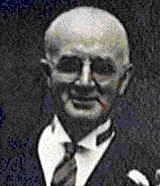
Jim
There are all
kinds of father’s
that we know is
true
and ours was the
right
kind through and
through
He wasn’t a buddy
nor was he a
friend
but he was an
excellent father
right to the end
His family he
loved
tried to visit
them often
and raised his
sister’s son
when he became an
orphan
He welcomed Ed
with open arms
and treated him as
a son
the love for my
parents that Ed had
was shown by
calling them mother and dad
He was a handsome
man
always very well
dressed
to that fact, all
who knew
him can attest
He walked fast and
talked fast
to accomplish all
he had to do
for when he
started something
he made sure he
saw it through
He worked long and
hard
to raise all of us
and more than
essentials
he provided for us
For recreation on
our yard
he built a swing
and with some
neighborly help
built a pond from
a natural spring
A father first,
many hats he wore
artist, church
worker, and
salesman just to
name a few
just how much good
he did
we never really
knew
Daddy’s brother,
Uncle Johnny
was funny as a
crutch
and although daddy
enjoyed life
he was more
reserved
and didn’t laugh
much
Carpenter and
pattern
maker by trade
he could have been
Santa
for all the toys
he made
Wooden tanks and
circus trains
with painted
animals
for the boys
today you’d pay
plenty
for those kinds of
toys
Along with other
things
he made a
beautiful
house for me
the likes of which
I never
have or ever
expect to see
all of this done
without electricity
In the cool of
winter or the heat
of summer he spent
many a night
making all those
for us
using only
gaslight
Like butter he
spread
himself around
time to do things
he always found
Toys weren’t the
extent
of my father the
ace
he tore down walls
and
made rooms and
closets
to make space
How he did it is
beyond me
an exceptional man
he had to be
and with that none
would disagree
Though he had to
have it hard
you couldn’t tell
from his demeanor
never put on a
poor mouth
even when times
got leaner
When the
depression put many under the sod
he just worked
harder and put his trust in God
In sixty one years
he lived the lifetime of two
because his
talents he used, I hope St. Peter
passed him right
through
Trudy Tinneny Gallagher June, 1993 |
OUR MOTHER
Gert
Mothers are saints
I’ve often heard it said
the closest to a
halo I ever saw
was a vinegar rag
around my mother’s head
she wore it I knew
to keep the fever down
caused by the
headaches that so often got her down
I did feel sorry,
I suppose
but being young
thought that’s the way it goes
Because I knew
some other mothers
who did the self
same thing
didn’t connect it
with being a saint
just thought it a
part of mothering
I often think now,
I really should have known
my mother was a
saint with all she’d undergone
she didn’t
complain although her life had to be hard
gas jets for light
and outhouse in the yard
A coal stove for
cooking and heating water on
our bath tub was a
wash tub
as plumbing for us
was yet to come
Wash and wear was
unheard of
and to mother
would have been heaven
washing and
ironing everyday was anything
but easy for a
household of *eleven
That’s a small
part of the hardships she endured
as for those
headaches, I doubt she was ever cured
If that vinegar
rag could talk, I think it would say
it was a
substitute for the halo my mother
would wear one day
I never heard it
said of fathers
though I think the
same is true
because as far as
I’m concerned
my father’s a
saint too.
Trudy Tinneny Gallagher 1993
|
Note:
Donald wasn’t born yet so there were eight siblings and Ed McColgan, our
cousin who was raised with us from the time he was seven. Counting my
mother and dad it made eleven. Ed and my brother Jim were the same age.
Note:
Descendants include his and his wife Gertrude
Ann Spence’s children James, Mary, Clare, John, Gertrude, Joseph,
Thomas, Bruce and Donald of Philadelphia and their many descendents..
 |
|
|


